Value-Based Care
Fueling the Shift to Value-Based Care
The United States spends far more on healthcare than other high‑income nations, yet too many patients still struggle with poor health outcomes and fragmented care. For families and communities, this often means navigating a system that feels overwhelming, costly, and disconnected.
At the same time, we know that most of what shapes a person’s health happens outside the exam room. Medical care accounts for only about 10-20% of health outcomes, while social and economic factors like housing, transportation, food access, education, and financial stability account for up to half or more.

Community health organizations understand this deeply. They are rooted in the neighborhoods they serve and care for the whole person, integrating behavioral health, coordinating services, addressing social needs, and building trusting, long‑term relationships with patients and families.
Value‑based care strengthens this approach. Instead of rewarding volume, it rewards better health outcomes: keeping people healthier, preventing illness, and supporting stability over time. It encourages care teams to work together, reduces unnecessary or duplicative services, and supports earlier, more coordinated care that helps people avoid crises.
At Carina Health Network, we manage value‑based care agreements for our members so they can focus on caring for patients. We help providers improve quality, reduce avoidable costs, and earn additional revenue for delivering high‑quality, cost‑effective care that genuinely improves people’s lives.
Sources: Commonwealth Fund | Peterson KFF Health System Tracker | Centers for Medicare & Medicaid Services (CMS) | American Medical Association (AMA)
How It Works
As a participant in our network, members aren’t navigating the complexities of value‑based care alone:
Shared Responsibility
and Reward
Members earn shared savings and other incentives by meeting quality targets and managing costs effectively
We negotiate and manage value-based contracts, reducing the administrative burden on individual clinics and securing more favorable terms
We provide the robust IT systems and data analytics required to track progress, identify care gaps, and demonstrate the value of the care you provide
The Foundation: High-Performing Primary Care
Value-based care and team-based care are deeply connected. To succeed in a value-based environment, we align our strategy with Bodenheimer’s 10 Building Blocks of High-Performing Primary Care, supporting members in implementing these essential blocks:
10
Template of the Future
8
Prompt Access to Care
9
Comprehensiveness
and Care Coordination
5
Patient-Team Partnership
6
Population Management
7
Continuity of Care
1
Engaged Leadership
2
Data-Driven Improvement
3
Empanelment
4
Team-Based Care
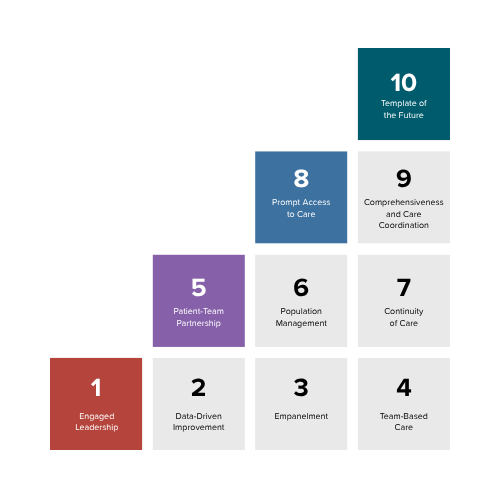
The Carina Advantage: By integrating these building blocks into our network standards, we move beyond simply “managing contracts” to helping our members transform the way care is delivered.
Value-Based Care in Action: Real Success Stories
Case Study: Preventing the Unforeseeable
Annual Wellness Visits (AWV) are a cornerstone of preventive care. When one of our member organizations implemented a new AWV program to increase these types of visits, the impact was immediate.
The Discovery: Within a few months, routine screenings identified two patients with Abdominal Aortic Aneurysms, a serious condition that often goes undetected until it becomes life‑threatening.
The Outcome: Because these were caught during routine value-based screenings, both patients received life-saving treatment, preventing devastating consequences.
Case Study: A Team-Based Turnaround
Success in value-based care often relies on Building Block #4 (Team-Based Care), where care teams work together to support patients.
The Challenge: A patient returned to the health center with diabetes that was dangerously out of control.
The Solution: Instead of sending the patient elsewhere, the primary care provider and pharmacist worked together to adjust medication and provide guidance to help the patient make healthier daily choices.
The Outcome: Through coordinated care, the patient’s condition stabilized, insulin was no longer needed, and blood sugar levels returned to a healthy range.
Ready to Join the Movement?
The future of healthcare is rooted in value, and your organization doesn’t have to navigate that transition alone. By joining Carina Health Network, you gain the data, the contracts, and the clinical framework needed to thrive.